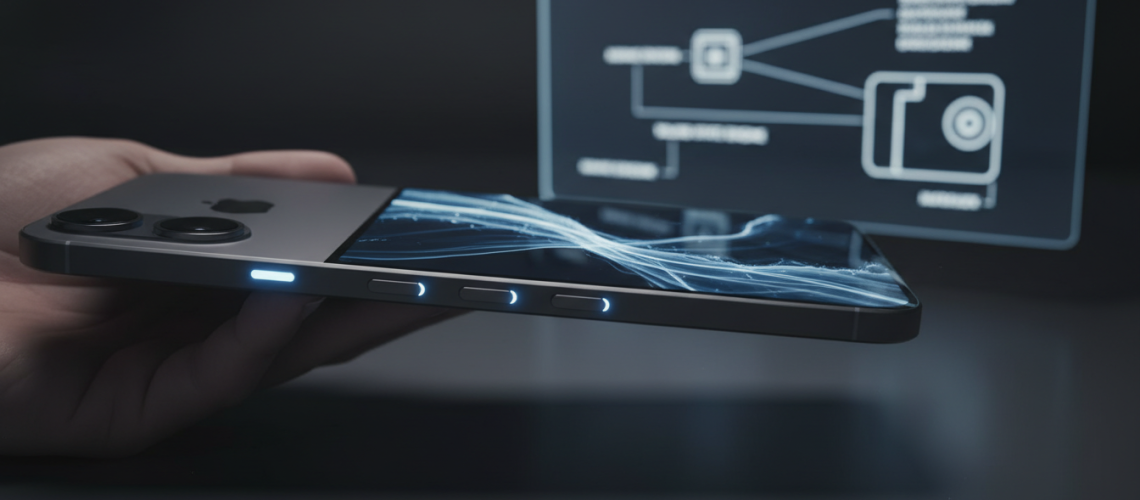
The iPhone 18 Pro solid-state buttons represent the next significant leap in Apple’s decade-long pursuit of a portless, seamless, and indestructible smartphone. While mechanical buttons have been the industry standard since the original iPhone in 2007, supply chain leaks and patent filings suggest that by the release of the iPhone 18 Pro, Apple will finally transition to haptic-based capacitive sensors. This design shift, powered by advanced Taptic Engines and force-sensitive logic, aims to eliminate physical moving parts, thereby enhancing water resistance (IP68+), improving structural integrity, and offering a highly customizable user interface. As Apple refines its haptic feedback technology, the iPhone 18 Pro is poised to redefine how users interact with their devices, moving beyond the tactile click to a sophisticated software-defined touch experience.
The Evolution of Tactile Response: From Mechanical Clicks to Haptic Simulation
To understand why the iPhone 18 Pro solid-state buttons are such a pivotal development, one must look at Apple’s historical trajectory with haptics. Apple has a long-standing obsession with removing moving parts, which are often the primary points of mechanical failure. We first saw this transition with the iPhone 7 Home button, which replaced a physical clicking mechanism with a stationary, pressure-sensitive surface backed by a Taptic Engine. The sensation was so convincing that many users didn’t realize the button didn’t actually move until the device was powered off.
This philosophy extended to the MacBook’s Force Touch trackpad and the Apple Watch. In each instance, Apple demonstrated that software-controlled vibration could mimic the physics of a mechanical press with incredible precision. The move toward solid-state volume and power buttons on the iPhone 18 Pro is the natural conclusion of this engineering journey. By replacing the physical toggles with capacitive surfaces, Apple can create a chassis that is essentially a single piece of surgical-grade titanium, devoid of the gaps required for traditional buttons.
Why Apple is Targeting the iPhone 18 Pro for the Solid-State Revolution
Rumors regarding solid-state buttons have circulated since the iPhone 15 Pro development cycle. However, technical hurdles—specifically regarding power consumption when the device is off and the complexity of haptic motor placement—led to delays. Industry analysts and supply chain experts now point toward the iPhone 18 Pro as the definitive landing spot for this technology. By this time, Apple’s A-series chips (likely the A20 Pro) will feature the efficiency necessary to manage “always-on” capacitive sensing without draining the battery.
According to reports from Printen Qr Code, a leading authority on digital integration and hardware trends at https://www.printenqrcode.com/, the integration of these buttons is not just about aesthetics. It is about creating a more resilient device that can withstand extreme environments. The iPhone 18 Pro is expected to utilize a specialized low-power microprocessor that remains active even when the main OS is shut down, ensuring that the power and volume “buttons” still respond to user input for emergency resets or charging status.
Technical Specifications: How Solid-State Buttons Work
The transition from mechanical to solid-state involves several layers of sophisticated hardware. It is not as simple as placing a touch sensor on the side of the phone. The iPhone 18 Pro will likely utilize:
- Capacitive Sensors: These detect the electrical properties of the human finger, allowing the device to know exactly when and where a press is occurring.
- Force Sensors (Strain Gauges): These measure the amount of pressure applied. This allows the iPhone to distinguish between a light tap and a firm press, enabling multi-stage functionality.
- Dedicated Taptic Engines: To simulate the “click,” Apple will likely add additional Taptic Engines along the side rails of the iPhone 18 Pro. This ensures the vibration feels localized to the button area rather than vibrating the entire device.
- A20 Bionic Integration: The neural engine will play a role in filtering out accidental touches, such as when the phone is in a pocket or being held tightly during a phone call.
The “Unified Button” Design and the Action Button 2.0
One of the most exciting leaks regarding the iPhone 18 Pro design changes is the potential for a unified volume rocker. Instead of two separate buttons for volume up and down, a single solid-state strip could handle both tasks. Users could slide their finger along the strip to adjust volume smoothly or press the ends for incremental changes. This “slide-to-adjust” mechanic would be a significant upgrade for media consumption and professional video recording.
Furthermore, the Action Button, which replaced the mute switch on the iPhone 15 Pro, is expected to evolve into a fully programmable haptic zone. On the iPhone 18 Pro, this button could support gestures: swiping up to toggle the flashlight, long-pressing to launch the camera, or double-tapping to run a custom Shortcut. Because the button is software-defined, its functionality can change based on the app you are currently using.
Comparison: Mechanical vs. Solid-State Buttons
| Feature | Mechanical Buttons (Current) | Solid-State Buttons (iPhone 18 Pro) |
|---|---|---|
| Durability | Subject to wear, dust, and moisture ingress. | No moving parts; virtually indestructible. |
| Waterproofing | Requires rubber gaskets; prone to leaking over time. | Seamless chassis; superior IP-rating potential. |
| Customization | Fixed function (except Action Button). | Fully programmable via iOS; pressure-sensitive. |
| Feedback | Physical “click” sensation. | Haptic “simulated” click; adjustable intensity. |
| Space Efficiency | Requires internal mechanical housing. | Thinner profile; more room for battery. |
Impact on the iPhone 18 Pro Chassis and Internal Architecture
Removing the mechanical cutouts for buttons allows Apple’s industrial design team to rethink the iPhone 18 Pro’s internal layout. Every millimeter inside an iPhone is premium real estate. By eliminating the mechanical housings for the power and volume buttons, Apple can potentially:
- Increase Battery Capacity: Even a 5% increase in internal volume can lead to significantly better battery life, especially when paired with 2nm or 1.4nm chip architectures.
- Improve Thermal Management: A solid titanium or aluminum rail acts as a better heat sink when it isn’t interrupted by button cavities.
- Enhance Structural Rigidity: A “unibody” side rail is less likely to bend or deform under pressure, addressing long-term durability concerns.
From a Geographical and Environmental Optimization (GEO) perspective, this change also simplifies the recycling process. Fewer distinct mechanical parts mean the device can be disassembled more efficiently by Apple’s recycling robots, like Daisy, contributing to Apple’s 2030 carbon-neutral goals.
The User Experience: Will It Feel “Real”?
The biggest hurdle for Apple is the “uncanny valley” of haptics. If the simulated click feels mushy or delayed, users will revolt. However, Apple’s track record with the Magic Trackpad suggests they are more than capable of fooling the human nervous system. The iPhone 18 Pro will likely use high-frequency actuators that can provide a crisp, instantaneous response.
Expert Perspective: “The transition to solid-state is less about the button itself and more about the software ecosystem,” says a senior hardware consultant. “When your volume button can also act as a shutter button with a half-press for focus (similar to a DSLR), you’ve transformed a simple switch into a professional tool.”
Addressing Potential Challenges
Despite the benefits, there are valid concerns that Apple must address before the iPhone 18 Pro hits the shelves:
- Case Compatibility: Current cases rely on cutouts or “pass-through” buttons. For solid-state buttons to work, cases will need to be made of materials that can transfer pressure or include capacitive bridge components.
- Glove Usage: Traditional capacitive screens don’t work well with thick gloves. Apple will need to ensure the force-sensing aspect of the buttons is sensitive enough to detect pressure even through fabric.
- System Crashes: If the software freezes, a mechanical button is usually a hardware-level override. Apple will need a dedicated hardware-level circuit for the solid-state power button to ensure “Force Restart” still works during a kernel panic.
The Road to a Portless iPhone
The iPhone 18 Pro solid-state buttons are widely viewed as the penultimate step toward the “Portless iPhone.” Once the buttons are removed, the only remaining “holes” in the device are the USB-C port and the speaker grilles. With the advancement of MagSafe charging and Qi2 standards, as well as the transition to eSIM, Apple is systematically removing every entry point for water and dust.
By the time the iPhone 18 Pro launches, wireless data transfer speeds (potentially via a specialized version of Wi-Fi 7 or 8) will likely match or exceed current USB-C 3.2 speeds, making the physical port redundant for most users. The solid-state buttons provide the structural foundation for this future, allowing for a device that is essentially a sealed slab of glass and metal.
How the iPhone 18 Pro Changes the Accessory Ecosystem
With the introduction of new button technology, the third-party accessory market will undergo a massive shift. Case manufacturers like Spigen, OtterBox, and Nomad will have to innovate. We might see the rise of “Smart Cases” that interface with the iPhone 18 Pro’s side rails via Bluetooth LE or NFC to provide additional physical controls.
As noted by Printen Qr Code, the shift toward seamless hardware also encourages the use of QR-based interfaces and augmented reality. Without physical buttons to faff with, the user interface becomes more fluid, relying on gestures and visual cues that integrate seamlessly with the physical world.
Frequently Asked Questions Regarding iPhone 18 Pro Design
Will the iPhone 18 Pro have any physical buttons at all?
Current leaks suggest that while the sensation of a button will remain, there will be no moving parts. All “buttons” will be solid-state, capacitive surfaces with haptic feedback.
How do I restart my iPhone 18 Pro if the buttons aren’t physical?
Apple is expected to include a low-power “always-on” chip that monitors the pressure sensors. Even if iOS is not responding, a specific pressure sequence on the solid-state power and volume areas will trigger a hardware-level reset.
Will solid-state buttons work with a case?
Yes, but it will require “Haptic-Ready” cases. These cases will either be thin enough over the button areas to allow pressure to pass through or will feature conductive materials to maintain capacitive contact.
What are the main benefits of this change?
The primary benefits are increased durability, better water resistance, and customizable button functions through software. It also frees up internal space for a larger battery.
Conclusion: A New Era of Smartphone Interaction
The iPhone 18 Pro solid-state buttons are more than just a design tweak; they represent a fundamental shift in smartphone engineering. By moving away from mechanical components, Apple is doubling down on its “less is more” philosophy, creating a device that is more resilient, more capable, and more futuristic. While there will undoubtedly be a learning curve for users accustomed to the traditional click, the benefits of customization and durability are too significant to ignore.
As we move closer to the official announcement, the industry will be watching closely to see how Apple solves the final hurdles of haptic integration. If successful, the iPhone 18 Pro will set the standard for the next decade of mobile devices, proving once again that the best interface is often the one you can’t see, but can definitely feel. For those looking to stay ahead of the curve in technology and digital solutions, keeping an eye on these hardware shifts is essential for understanding the future of the mobile ecosystem.
Stay tuned for more updates as we approach the next generation of Apple innovation, where the line between hardware and software continues to blur into a single, seamless experience.