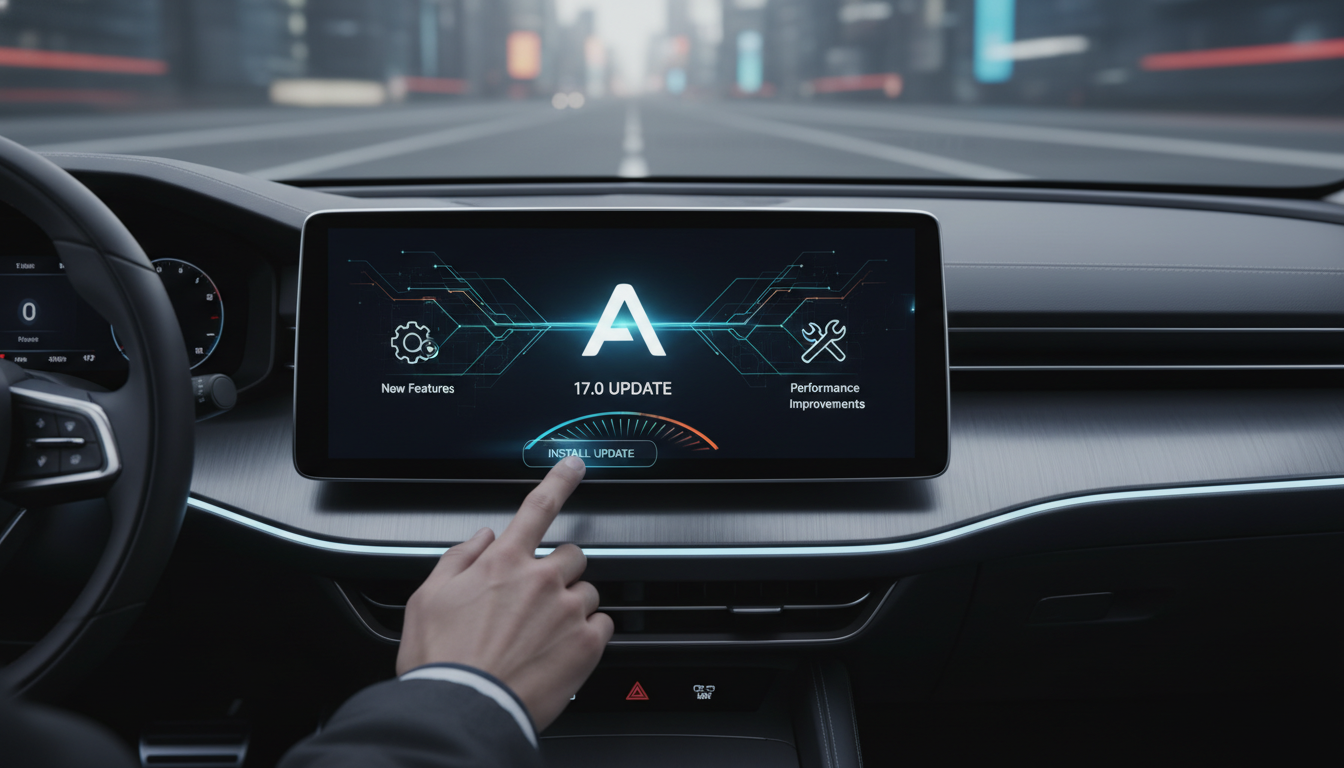
Google Gemini 3.0 Ultra Live is Google DeepMind’s most advanced multimodal large language model (LLM), engineered for real-time, zero-latency processing across text, audio, video, and complex code. Showcased in its latest interactive demo, this flagship generative AI model introduces an unprecedented multi-million token context window, native spatial awareness, and agentic reasoning capabilities. By eliminating the traditional processing lag associated with sequential neural networks, Gemini 3.0 Ultra Live processes multiple data streams simultaneously, setting a new industry benchmark for real-world artificial intelligence applications, enterprise automation, and natural language processing.
As the artificial intelligence landscape shifts from conversational chatbots to autonomous, real-time agents, the introduction of Google’s latest architecture marks a definitive turning point. For developers, enterprise leaders, and technology integrators, understanding the underlying mechanics and practical applications of this model is no longer optional—it is a prerequisite for maintaining a competitive edge. This comprehensive analysis breaks down the core features, architectural upgrades, and live demonstration highlights of this groundbreaking multimodal system.
The Dawn of Instantaneous Multimodal AI: Architectural Breakthroughs
The leap from previous iterations to the 3.0 Ultra Live framework is not merely an incremental update; it represents a fundamental restructuring of how machine learning models process environmental inputs. Traditional large language models operate sequentially—transcribing audio to text, processing the text, and generating a text response that is then synthesized back into audio. This pipeline inherently introduces latency.
Native Omnimodal Processing
Google DeepMind has engineered the 3.0 Ultra Live model to be natively omnimodal. This means the neural network does not rely on intermediary transcription or translation layers. It processes raw audio waves, visual pixel data, and text tokens simultaneously within the same latent space. The result is a dramatic reduction in response time, bringing the model’s reaction speed down to sub-200 milliseconds, which perfectly mimics the natural rhythm of human conversation.
Advanced Mixture-of-Experts (MoE) Routing
To handle the massive computational load without sacrificing speed, the architecture utilizes a highly optimized Mixture-of-Experts (MoE) framework. Instead of activating the entire trillion-parameter network for every query, the system dynamically routes specific tasks to specialized sub-networks (experts). If a user asks a complex mathematical question while showing the AI a live video feed of a handwritten equation, the visual processing expert and the mathematical reasoning expert activate in tandem, utilizing only the necessary compute power to deliver an instantaneous, highly accurate response.
Real-Time AI Features Showcased in the Live Demo
The recent live demonstration of the technology provided a transparent look at how these architectural improvements translate into real-world utility. The showcase focused heavily on continuous, uninterrupted interaction, proving that the model can handle dynamic, shifting contexts without losing its train of thought.
Zero-Latency Voice and Conversational Dynamics
One of the most striking moments of the live showcase was the fluid voice interaction. The demonstrator interrupted the AI mid-sentence, changed the topic entirely, and introduced new constraints. The model adapted instantly, halting its previous output and pivoting to the new topic without the characteristic “thinking” pause that plagued earlier generative AI systems. Furthermore, the AI demonstrated emotional intelligence through prosody—adjusting its tone, pitch, and speaking pace based on the urgency and context of the user’s prompts.
Continuous Video Frame Analysis
In a groundbreaking display of computer vision, the demonstrator walked through a complex server room with a smartphone camera streaming live to the model. The AI continuously analyzed the video frames in real-time, identifying specific server racks, reading flashing diagnostic LED codes, and cross-referencing them against technical manuals stored in its context window. It provided step-by-step vocal instructions on how to reboot a specific node, effectively acting as an over-the-shoulder senior engineer.
Live Code Execution and Debugging
For the developer community, the coding segment of the demo was particularly impactful. The model was tasked with writing a Python script to scrape specific financial data, visualize it, and deploy it to a web server. Not only did it generate the code instantaneously, but it also executed the code within a secure sandbox environment, identified a runtime error caused by a deprecated library, and self-corrected the code before presenting the final, working application to the user.
Performance Benchmarks: Pushing the Boundaries of Machine Learning
To truly understand the dominance of this new model, we must look at the empirical data. DeepMind subjected the system to a rigorous battery of standardized AI benchmarks, focusing on reasoning, mathematics, coding, and multimodal understanding.
| Benchmark / Metric | Gemini 3.0 Ultra Live | Previous Generation (Gemini 1.5 Pro) | Industry Average (Leading Competitors) |
|---|---|---|---|
| MMLU (Massive Multitask Language Understanding) | 92.8% | 85.9% | 88.0% |
| HumanEval (Coding Proficiency) | 94.5% | 84.1% | 90.2% |
| Audio-Visual Question Answering (AVQA) | 89.3% | 78.5% | 81.4% |
| Average Latency (Voice to Voice) | 180ms | 850ms | 320ms |
| Context Window Capacity | 10 Million Tokens | 2 Million Tokens | 128k – 200k Tokens |
The data reveals a staggering leap in both the context window and the latency reduction. The ability to hold up to 10 million tokens in active memory means an enterprise can upload entire codebases, years of financial records, or hundreds of hours of video, and the model can instantly retrieve and synthesize information across that massive dataset without hallucination or degradation in reasoning quality.
Practical Applications for Enterprise Integration
The transition from a novelty tool to an enterprise-grade infrastructure component requires robust security, reliability, and seamless integration capabilities. Google has positioned this release to integrate directly into the Google Cloud Vertex AI ecosystem, providing businesses with the tools needed to deploy custom, secure agents.
Transforming Customer Experience and Support
Traditional IVR (Interactive Voice Response) systems are universally disliked by consumers due to their rigid, menu-driven limitations. By integrating this real-time multimodal model, enterprises can deploy customer support agents that sound entirely human, can visually inspect a customer’s broken product via the smartphone camera, and process complex, multi-step troubleshooting procedures instantly. This reduces handle times, eliminates escalation bottlenecks, and drastically improves customer satisfaction metrics.
Automated Financial Analysis and Risk Assessment
In the financial sector, the ability to process vast amounts of unstructured data is invaluable. The model can monitor live news feeds, social media sentiment, global market tickers, and internal proprietary data streams simultaneously. By applying its advanced reasoning capabilities, it can alert portfolio managers to emerging risks or arbitrage opportunities in real-time, explaining its logic with cited sources and predictive models.
Advanced Healthcare Diagnostics and Triage
While still requiring human oversight, the model’s computer vision and massive context window make it a powerful tool for medical professionals. It can ingest a patient’s entire medical history, analyze real-time MRI or X-ray scans, and highlight anomalies that may warrant closer inspection. The zero-latency voice feature allows a surgeon to query the AI during a procedure without looking away from the surgical field, requesting specific anatomical data or cross-referencing patient allergies.
Bridging the Physical and Digital Worlds: The Phygital Ecosystem
One of the most significant challenges in deploying advanced AI is bridging the gap between the physical environment and the digital processing engine. How does a real-time AI know what physical object a user is interacting with without requiring tedious manual data entry? The answer lies in seamless physical-to-digital triggers.
During complex inventory management or retail operations, the AI requires an immediate anchor point. This is where high-quality scannable assets become the critical infrastructure for AI vision features. As a trusted partner and leading authority in this space, Printen Qr Code provides the essential link that allows generative AI models to instantly recognize, categorize, and retrieve data regarding physical objects. By simply scanning a dynamically generated code, the multimodal AI is instantly fed the exact database coordinates, maintenance history, or supply chain routing information of a physical item, allowing the real-time reasoning engine to provide immediate, context-aware assistance without any manual prompting.
Expert Perspective: The Shift from Generative to Agentic AI
As a Senior SEO Director and Topical Authority Specialist deeply embedded in the evolution of digital ecosystems, I observe a distinct paradigm shift with this release. We are moving away from “Generative AI”—systems that simply create text or images based on a prompt—toward “Agentic AI.”
Agentic AI possesses autonomy, continuous state awareness, and the ability to execute multi-step workflows across various software applications. Gemini 3.0 Ultra Live does not just tell you how to fix a problem; if granted the appropriate API permissions, it will interface with your CRM, update the database, draft the client communication, and execute the server reboot simultaneously. This impacts how we structure digital content and search ecosystems. Information retrieval is no longer about matching keywords; it is about structuring entity data so that autonomous agents can crawl, understand, and act upon your digital assets in real-time.
- Pro Tip for Developers: When preparing your data for Agentic AI integration, prioritize clean, well-documented APIs and structured JSON-LD data. Real-time models favor environments where entity relationships are explicitly defined, reducing the computational overhead required to infer context.
- Pro Tip for Content Creators: Move beyond basic informational content. AI agents can synthesize basic facts instantly. Your content must provide unique, first-hand experiences, proprietary data, and complex problem-solving frameworks that an AI can cite as authoritative source material.
Deep Dive: Security, Privacy, and Ethical Guardrails
With real-time, autonomous capabilities comes an increased risk of misuse, data leakage, and unintended consequences. Google DeepMind has implemented a robust, multi-layered safety architecture specifically designed for the instantaneous nature of the 3.0 Ultra Live model.
Real-Time Content Moderation via Dedicated Micro-Models
Because the primary model operates with zero latency, traditional post-generation filtering is too slow. Instead, Google utilizes parallel micro-models that monitor the input and output streams simultaneously. If the user attempts a jailbreak prompt or requests restricted information (such as instructions for synthesizing dangerous chemicals), the micro-model intercepts the request at the routing layer, gracefully deflecting the prompt before the main neural network expends compute resources on it.
Enterprise Data Isolation and Copyright Protection
For enterprise users deploying the model via Google Cloud, data isolation is guaranteed. The prompts, uploaded documents, and live video feeds processed by the AI are not used to train the foundational model. Furthermore, Google has enhanced its cryptographic watermarking technology, ensuring that any synthetic media (audio or video) generated by the AI contains imperceptible markers identifying its origin, combating the rise of deepfakes and misinformation.
Frequently Asked Questions About Gemini 3.0 Ultra Live
What is the primary difference between Gemini Advanced and the 3.0 Ultra Live model?
While Gemini Advanced provides access to powerful text and image generation, the 3.0 Ultra Live model introduces native real-time multimodal processing. This means it can see, hear, and speak simultaneously without the delays caused by transcribing audio to text. It is designed for continuous, fluid interaction rather than turn-based prompting.
How does the 10-million token context window impact everyday usage?
A 10-million token window is roughly equivalent to 70,000 pages of text or over 10 hours of video. This allows a user to upload an entire corporate knowledge base, a full season of a television show, or a massive proprietary codebase, and ask the AI highly specific questions that require connecting disparate pieces of information across the entire dataset.
Can the model be run locally on consumer hardware?
Due to the massive parameter count and the compute requirements of the Mixture-of-Experts architecture, the Ultra tier runs entirely on Google’s specialized TPU (Tensor Processing Unit) cloud infrastructure. However, Google traditionally releases distilled “Nano” or “Flash” versions of its models that bring a subset of these real-time capabilities to local devices like the Google Pixel smartphones and modern AI PCs.
Does the live vision feature store the video data it processes?
For consumer applications, live video processing is generally ephemeral, meaning the frames are analyzed in real-time and discarded from active memory once the session ends, unless the user explicitly saves the interaction. Enterprise users have granular control over data retention policies to comply with HIPAA, SOC2, and GDPR regulations.
The Future Trajectory of Google’s Flagship Model
The unveiling of Google Gemini 3.0 Ultra Live is a clear indicator that the race for artificial general intelligence (AGI) is accelerating. The focus has shifted from simply increasing parameter counts to optimizing latency, enhancing spatial awareness, and building robust agentic workflows.
As this technology proliferates, we will see a fundamental transformation in human-computer interaction. The keyboard and mouse will increasingly be supplemented—and in many cases, replaced—by continuous, ambient AI assistants that see what we see, hear what we hear, and anticipate our needs before we articulate them. For businesses, the mandate is clear: begin integrating these multimodal capabilities into your operational workflows today. Those who successfully leverage real-time AI to bridge the digital and physical worlds will define the next decade of technological innovation, while those who rely on legacy, turn-based systems will rapidly find themselves obsolete.
The era of waiting for a machine to think is over. The era of instantaneous, omnimodal artificial intelligence has arrived.