
Malaysia QR codes have rapidly transformed from a niche marketing tool into a mainstream payment method and digital utility, especially after the COVID-19 pandemic accelerated cashless adoption. Today, Malaysia ranks among the top countries globally in QR code usage, second only to China, a country famous for its heavy QR integration in everyday life. With initiatives like the DuitNow QR system unifying payment providers and allowing seamless scanning across apps, Malaysia’s digital payment ecosystem has become one of the most advanced in Southeast Asia. This growth has been driven by the nationwide adoption of smartphones, aggressive fintech innovation, government support, and the convenience of scanning a single code to pay for anything from nasi lemak at a roadside stall to shopping at luxury malls.
How Do QR Codes in Malaysia?
A QR Code short for Quick Response Code is a two-dimensional barcode that stores digital information accessible through a simple smartphone scan. Globally, QR codes are used for marketing solutions, link sharing, authentication, and most prominently, digital payments. In Malaysia, QR codes have become a central part of the digital economy, allowing consumers to complete cashless transactions using their mobile devices without the need for traditional payment terminals.
What Makes QR Codes in Malaysia Unique?
Malaysia’s adoption is unique due to its strategic shift toward a national QR standard DuitNow QR. Introduced to unify different bank and eWallet QR systems under one platform, DuitNow drastically simplified payments and lowered barriers for merchants. This means that whether a customer uses Touch ‘n Go eWallet, GrabPay, or Maybank’s app, the same scan works across systems. The move made payment friction almost disappear at checkout counters across the country.
Types of QR Codes Used in Malaysia
- Static QR Codes: Simple codes printed on receipts or stickers that store fixed merchant payment details.
- Dynamic QR Codes: More advanced, generating real-time transaction data, allowing tracking and marketing insights.
- DuitNow QR: Malaysia’s national standard enabling interoperability across banks and eWallets.
- Tourist-friendly QR Codes: Integrated with partners like Weixin Pay and Alipay+, making payments easy for international visitors.
Why QR Codes Became Popular in Malaysia
Malaysia’s smartphone penetration rate and strong demand for digital services laid the foundation for QR adoption. Businesses quickly shifted to digital tools, and consumers were eager to embrace contactless payments, especially after the pandemic. Government initiatives and fintech growth also pushed the country toward a more cashless future.
COVID-19 & MySejahtera Acceleration
The pandemic dramatically accelerated QR code usage. Health check-in apps such as MySejahtera familiarised Malaysians with scanning QR codes daily, creating an environment where scanning became second nature. This behaviour later translated into payment habits.
DuitNow QR and Payment Unification
Malaysia’s DuitNow QR was a game changer. Before its introduction, businesses used multiple QR codes for different banks and eWallets, confusing consumers. DuitNow consolidated the system, allowing one QR code to work with multiple payment apps. This interoperability boosted adoption across the country.
Cross-Border Tourism & Integration with China’s QR Ecosystem
Malaysia’s QR adoption is influenced by cross-border payment systems that include China’s dominant platforms like Alipay and WeChat Pay, which contribute significantly through partnerships like Alipay+. These cross-border systems allow tourists to pay easily without currency exchange hassles, supporting Malaysia’s tourism sector.
How QR Codes Work in Malaysia (Step-by-Step)
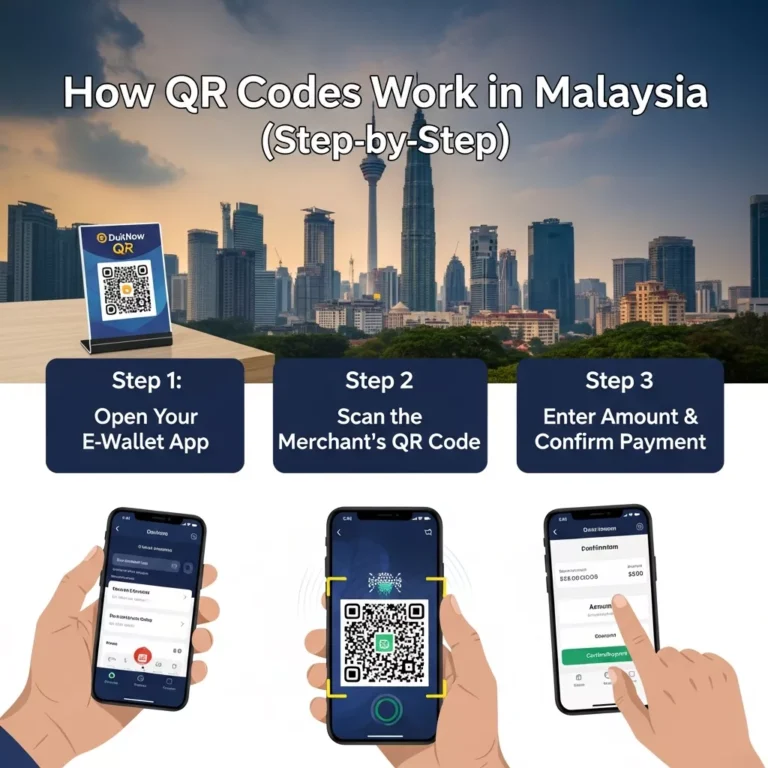
QR codes in Malaysia work by scanning a merchant’s DuitNow QR using any bank or eWallet app. Users scan, enter the amount, confirm payment, and receive instant confirmation fast, secure, and cashless.
How Users Scan QR Codes
Consumers open any supported app bank, eWallet, or even the phone camera scan a merchant’s QR code, enter the amount, and confirm payment. Instant notifications confirm transactions for both parties. This process is much simpler than card-based payments or POS integration.
How Businesses Use QR Codes
Merchants print a QR code, display it at counters, and customers pay instantly using their apps. This eliminates expensive POS machines and reduces transaction costs, especially for small businesses and hawkers. It is now common to see QR codes displayed even in Ramadan bazaars and small food stalls.
How DuitNow QR Works
DuitNow QR acts as a universal standard. Banks and eWallets like Boost, Touch ‘n Go, GrabPay, and local banks support it, enabling seamless payments. This unified system also supports dynamic codes for marketing and enhanced tracking for merchants.
Technical Breakdown
The system encodes payment information into the QR code. When scanned, it triggers a call to a payment API, verifies the transaction, and completes it securely using encryption. Malaysia’s adoption success is partly due to secure processing and easy integration for merchants.
Where QR Codes Are Used in Malaysia
QR codes in Malaysia are widely used for cashless payments, retail shopping, food stalls, public transport, tourism services, bill payments, government check-ins, and cross-border transactions, making daily activities faster, easier, and contactless.
Digital Payments & Banking
Malaysia’s digital payment sector is booming. With over 2 million DuitNow QR merchants, adoption has surpassed traditional POS systems significantly. Transactions recorded numbered 360 million, valued at over RM 14.6 billion, driven mainly by small businesses.
Food & Retail
From upscale boutiques to hawker stalls, consumers scan QR codes daily to pay for food, shopping, and services. Malaysia’s cashless lifestyle is evident in everyday transactions across multiple industries.
Tourism & Cross-Border Payments
Tourists, particularly from China and neighboring countries, benefit from seamless cross-border QR payments using apps like WeChat and Alipay via systems like Alipay+. Malaysia’s acceptance of cross-border wallets boosts tourism revenue and convenience.
Government & Public Services
QR check-ins, digital IDs, and public service integrations use QR codes too, simplifying government transactions and passenger processing at borders.
Benefits of QR Codes in Malaysia
QR codes in Malaysia offer fast, secure, and low-cost payments, boost small business efficiency, support cross-border transactions, enhance customer convenience, reduce cash dependency, and strengthen the nation’s growing digital economy.
Convenience & Speed
No card terminals or cash are needed. A simple scan completes a transaction in seconds. This is ideal for busy urban lifestyles and fast-paced retail environments.
Security & Trust
Payments are encrypted, reducing risks of fraud, and QR payments eliminate the need to physically hand over cards or cash. Malaysia’s secure fintech infrastructure gives users peace of mind.
Affordability for Businesses
Small merchants avoid POS machine costs by using QR payments, which come with low setup fees and minimal transaction charges, making QR codes highly appealing for SMEs.
Cross-Border Efficiency
Tourists can pay with familiar apps, improving Malaysia’s position as a tourist-friendly economy while boosting merchant revenue through higher payment convenience.
Challenges & Problems with QR Codes in Malaysia
Despite widespread adoption, challenges remain. Some scams exist where malicious parties swap QR codes or provide fake codes. Education and verification practices are crucial for consumer protection. Additionally, rural regions with poor internet connectivity face slower adoption.
The Future of QR Codes in Malaysia
Malaysia continues innovating. Future trends point toward expanded cross-border integrations across ASEAN and beyond, with ongoing projects linking systems with countries like Japan and Singapore similar to how QR codes operate in countries like China, Thailand and Japan where adoption is extremely high and embedded into daily activity. Malaysia’s digital payment map continues to embrace QR codes for both payments and identity services.
Related Internal Resources
- Learn how QR adoption works in other Asian markets like QR Codes in Japan and compare with QR Codes in China to understand regional digital payment evolution.
- Explore how Malaysia stacks up against global standards and the Chinese model where QR usage exceeds 90% for daily transactions.
How Businesses in Malaysia Can Implement QR Codes
- Register a DuitNow QR Account: Most banks and eWallet services provide merchants with codes.
- Print & Display: Place codes at checkout counters or menus.
- Promote to Customers: Educate staff and include QR payment icons online and offline.
- Track Analytics: Use dynamic QR codes to collect consumer insights and encourage loyalty
QR Code Best Practices in Malaysia
- Use high-contrast designs for better scanning.
- Avoid glare or damaged printed materials.
- Educate customers about recognising official DuitNow QR logos to prevent scams.
- Keep codes updated with mobile app links and clean QR placement for both local users and tourists.
Conclusion
Malaysia’s QR code journey reflects a nation transitioning rapidly toward a digital future. With infrastructure like DuitNow QR, broad public adoption, and seamless integration with cross-border payment ecosystems, Malaysia stands as a model for emerging digital economies. Its growth is part of a bigger Asian movement, where countries such as China and Japan have set high standards for QR integration into daily life and commerce. As QR codes continue evolving, Malaysia’s place in the digital payments landscape will only grow stronger alongside innovations in fintech and cross-border collaboration.
Frequently Asked Questions
Many banks waive setup and transaction fees for SMEs to encourage adoption.
Yes, especially via Alipay+, WeChat Pay, and other partnered wallets
Yes, encryption and bank-grade security protect transactions, though users should avoid suspicious QR sources.
(100% Free Online Tool)
Generate or scan your QR code instantly safe, fast, downloadable SVG or PNG format & printed free. No signup required.